To contact us Click HERE
My main project for the summer is basically the dream of any soon-to-be job-seeking college student (like myself). I am working with Human Resources to research and develop a social media strategy for recruiting, observing what kind of cool new methods other companies are implementing. The best part of this job is that my research consists of looking at company websites, twitter accounts, LinkedIn profiles, facebook pages and YouTube accounts all day long. Lately, I’ve been too busy to keep up with my research, but now that our presentations are going to be here oh so soon (exactly two weeks from now) I have to make time so I can be fully prepared to explain what’s going on in the exciting world of recruitment.
Here is a little peek of what I’ve been working on …
twitter – Lots of companies are using their twitter feeds to publicize job openings in addition to sharing information about their culture or their employees, so I follow anyone and everyone from our main competitors to companies like Starbucks and Google. One thing I’ve learned: Recruiters love to tweet … all the time.
So many tweets, so little time ...
YouTube – Some companies are using YouTube to promote their company culture and the organization by posting videos of company events and employee profiles showcasing what they love about their jobs. (How cool is that?!)
Since I’m a marketing major, all of this research is showing me how many different ways social media can be used for one company. Also, I will begin looking for my first post-grad job rather soon, and I’m learning how to be as thorough as possible when preparing for an interview. Most people long for the time to invest in this kind of research, and I’m lucky enough to have it be my job!
I couldn’t end this post without a shameless plug for Vera’s company culture or our open jobs … so check out the official Vera Bradley blog, Inside Stitch, for some fabulous posts about life at Vera Bradley, and be sure to stop by our Careers page to see what openings we have at our home office and in our retail stores!
To contact us Click HERE This response to Howard Nemerov’s “Style” was my first poam under Limited Fork. I began the semester so very lost–not confused in the sense that I knew where to find the answers; lost. At first, I was not even sure what to do. So, I admit, I didn’t do much, that is, until I began exploring the multitude of sources provided on the course site. I discovered and listened to “Why Fork?” This awoke an awareness (albeit still very limited) to what we were to explore, and how. The answers to these seemed to be anything and everything, and in any way you’d like. We had been introduced to Nemerov’s “Style, so I started there. After deciding that I would like to work with multimedia, I recorded the pieces and constructed my first sonic essay. There were two decisions that I had to make in order to progress. What did I want to explore? [and] How was I going to document or communicate my journey? What did I want to explore? I was searching for the starting line. It wasn’t until I realized that I was searching for something too lofty that I needed to simplify my project, and look at the things that I have access to around me. After a trip home, I decided to explore intimacy. Home had been struck by a series of life-altering events in the weeks coming up to the semester, and every person within the immediate family had an obligation to adjust. I wanted to track this progression. I began by gathering recordings and video of the relevant past, recording conversations with my iPhone as discreetly as possible so as to retain the natural conversation. In the meantime, I read Tender Buttons, by Gertrude Stein. I listened to Stein’s reading “A Valentine to Sherwood Anderson,” and “The Making of Americans,” and identified four phrases that resonated with one’s own being and feeling, and that being and feeling with someone. I extracted these four phrases as my audio track for “A Gertrude Stein Orchestration.” The phrases are repeated 4 times, each in a different order, with the first phrase remaining the same.
Along with my increased awareness in the most intimate and meaningful relationships around me, this project put me in contact with video and audio processes to create the piece. Since the beginning of the semester I have spent some time on learning adobe premiere and adobe soundbooth to produce the desired effects for communication. Vibrations Keep Water Out of Lotus Leaves Soon after, I read an article on the way lotus leaves vibrate on their stems to repel water from the surface. This idea of resistance had never occurred to me, and I was not necessarily sure how to handle it, but it felt an important characteristic of intimacy. I continued to record conversations and lectures, extracting those moments I found relevant beyond the moment. While experimenting with how to translate text into a multimedia or interactive experience, and inspired by For All Seasons, I began working with kinetic typography. Then, one of the worst (or best) things happened to my work. I witnessed the crash of my 750GB external hard drive; nearly every document, photo, audio and video file lost with no recovery in sight. Filled with anxiety, I was back searching for a starting line. I had to exercise my memory. I began hand-writing in a journal to continue my sense of awareness. I spoke about how during conversations and lectures of times I was recording I lacked presence because I knew I was capturing the moment and could return at anytime. With all of this lost, I was truly left with only a fleeting memory of the experience. I had read “The Kingdom of Infinite Space,” a work that resonated well with my background in cognitive science. It took a turn inward, about the relationship of the body and mind, and I thought maybe I could go there, too. With Memory in mind, I turned back to writing sonic essays. I had photos from our Paper Brain/Social Construction exercise and some video left on my iPhone. Working with what media I had, I made a second video piece with an accompanying text. The video begins with photos and video captured of the paper brains. It also includes scanned images of my journal so far, superimposed onto video that captures the act of writing.
That is current state of my project. As I continue to (re)capture video, audio, photos and other media, I hope to continue to gain application experience in making videos like those that I have posted here. I feel that my project will at least begin with a continued focus on the self, awareness and memory in reference to the self. I would like to continue to incorporate and (re)orchestrate the texts and media of others (such as was done with Gertrude Stein), and discover paths through texts that are not my own. Hearing the presentations of the progress others have made held as one of the most significant moments of the class, and leaves me enthusiastic to be starting back at start with the experiences of these last fourteen weeks.
As one last night, I thought I would expand on the title of this blog. Thylias continually referred to our projects as infants, and simply with my inevitable loss, my project has returned to a stage just beyond conception.
I leave you with a script in the making for a sonic essay.
Limits & Resistances I was, and have been, realizing limits and resistances in myself. The former is uncontrollable, we are only so much. The latter, able to be broken down. There are those universal limits, we are all only human. But, again, these were lofty, over the top. I was brought back down; To my own limits, and the difference between limits and resistances. My limits would by and large never change. But what I resisted was my own doing. Choices I was making to act out or not act out. What was stopping me from always acting, and speaking, and responding, and making progress? Filtering myself, looking back, and being filled with regret. I took notice to my mind-body relationship. How my body reacts to feelings of tension, shyness, embarrassment, stress, fear, and so on. My resistance was a social construction, A crease in the brain and mind, That could perhaps be flattened but would never wholly vanish; vibrations (of resistance) dialed down to a low echo.
How memories have the power to rekindle those feelings and reactions. The power of the memory of the mind.
To contact us Click HERE
I was about to go for a swim, and I noticed that I was taking off my iPod and my headphones before entering the water. The change of medium from air to water is an impediment; it literally distorts the physical sound waves so that the previously lucid music becomes muddled and unintelligible. Disregarding that aspect of impediment, there would obviously be some sort of electrical malfunction once the electronics make contact with the water. Throughout the semester, I attempted to piece together interactions, and display the uncontrolled but progressive flow; this notion of hindering, however, is not something I considered until recently. The reason it went unnoticed is because it cannot be analyzed until the ability to recognize its influence is gained. How would you know you were going to perform a certain action, or have a certain thought if you never even experienced it? This leads to an overwhelming sense of infinite possibility that one can never encounter, yet the impediment needs to exist so this chaotic path will never be taken. Even when considering the Lichtenberg Figure, the clear medium gives the energized electrons a space in which to travel, but its size restricts its advancement and ultimate shape. Though failure was often discussed and encouraged, impediment is different because it does necessarily facilitate a completely new undertaking, but rather an alternate route, and unlike failure it is much more insidious only because it cannot be immediately recognized. This realization of impediment is now requiring me to make some changes to my internet history model, for it only shows what materialized, and lacks the ability to expose possible road blocks.
and the dread of not knowing if you like a short story, despite its undeniable strain of dread
Two (from the collaborative project Seconds by Adam Simon and Matthew Sharpe)
The meanness of the satirical essay you wrote hit me yesterday like a baseball on the chin. Those Sundays we lay curled up in each other on your hard futon kissing and discussing Marx eventually gave me serious lower back problems but at the time I was having like these day-long orgasms in my brain. You said, "Satire will be an important tool for the revolution," and maybe it will but it also can be a place for someone to hide from the intensity of any real feelings he may have and also to transmute them into a very painful projectile to be hurled at the person he has them about.
It felt so good to be able to unburden myself to you re my inner conflict over my job at the ad agency, so then to see it lampooned yesterday on your blog in what was basically a "humorous" open break-up letter to me - "I'm hoping my $10 million campaign for the US Army is offset by the fact that I buy only free-range organic granola" - made me feel, well, I don't know, what does Marx say about how it feels to be betrayed by someone you lay naked next to for a cumulative total of fourteen months of your life, someone whom you let pull your hair - hard! - during sex because it game him so much pleasure even though it really hurt you although you sort of liked it but only because of the obviously intense pleasure he was deriving?
Also, do you think those cool hand-printed signs in the window of your bicycle shop aren't advertising?
After I read your thing I had a lot to say and even if you thought you knew what I was going to say and didn't want to hear it from yet another person, it wasn't fair to not let me say it, and the beautiful mixtape you gave me didn't make up for that because if I've gained any knowledge from my time with you it's that beauty is one thing and fairness is another.
You said, "The distinction between the public and the private is a distinction internal to bourgeois law." So you keep posting those satires of me on your blog from the back of that little storefront were you work and sleep, and I'll climb up to the roof deck of my nice apartment building and advertise to the world till I'm hoarse that i loved you.
To contact us Click HERE
My main project for the summer is basically the dream of any soon-to-be job-seeking college student (like myself). I am working with Human Resources to research and develop a social media strategy for recruiting, observing what kind of cool new methods other companies are implementing. The best part of this job is that my research consists of looking at company websites, twitter accounts, LinkedIn profiles, facebook pages and YouTube accounts all day long. Lately, I’ve been too busy to keep up with my research, but now that our presentations are going to be here oh so soon (exactly two weeks from now) I have to make time so I can be fully prepared to explain what’s going on in the exciting world of recruitment.
Here is a little peek of what I’ve been working on …
twitter – Lots of companies are using their twitter feeds to publicize job openings in addition to sharing information about their culture or their employees, so I follow anyone and everyone from our main competitors to companies like Starbucks and Google. One thing I’ve learned: Recruiters love to tweet … all the time.
So many tweets, so little time ...
YouTube – Some companies are using YouTube to promote their company culture and the organization by posting videos of company events and employee profiles showcasing what they love about their jobs. (How cool is that?!)
Since I’m a marketing major, all of this research is showing me how many different ways social media can be used for one company. Also, I will begin looking for my first post-grad job rather soon, and I’m learning how to be as thorough as possible when preparing for an interview. Most people long for the time to invest in this kind of research, and I’m lucky enough to have it be my job!
I couldn’t end this post without a shameless plug for Vera’s company culture or our open jobs … so check out the official Vera Bradley blog, Inside Stitch, for some fabulous posts about life at Vera Bradley, and be sure to stop by our Careers page to see what openings we have at our home office and in our retail stores!
To contact us Click HERE fish eye lens advantage image from forkergirl's photostream
In this consideration of Mermaid as Metaphor, a point of entry and a point of departure (bifurcation hub) are formed by two elements brought together (in a range of manipulations) forming a third element that is a composite of the two (1 element plus 1 element = a 3rd element [1+1=3], as Rima pointed out in a limited forked multimedia story class). At this hub is a common depiction of mermaids in which two unrelated biological segments of two organisms are brought together in (primarily visual) unification usually depicted as horizontally split halves forming wholeness: a mermaid.
This (visual) wholeness is a form of marriage, an easily imagined evolutionary progression or regression of marriage. Though the one mermaid outcome of wholeness formation is usually offered, there are at least two composites that would emerge from each union in this imagined evolution or regression. Human upper body + fish lower body, and human lower body + fish upper body. This is an answer to where's the other halves? —the human lower body and the fish upper body? An example of this more complete merger outcome scenario supplies the horror factor of The Fly (1958). The human/fly hybrid is created when a teleportation experiment meant to be an exclusively human teleportation experiment becomes a human/insect teleportation experiment when a fly is discovered inside the teleportation chamber with the scientist when the experiment is already underway and no one is there to stop the experiment. Though the human/fly hybrid is an unintended outcome, that the hybrid is an outcome indicates a form of successful, if horrifying, biological union. The film features both composite forms: human body with fly head/hand and fly body with human head/hand. Once the hybrids emerged, the assumption was that capturing the fly body/human head composite and repeating the experiment with both hybrid outcomes in the chamber, would restore the human and the fly to pre-composite forms though other possibilities would have been as likely had the fly body/human head variation not been snared in a web of spider for whom the genetic modifications of the humanized insect changed nothing.
A cautionary tale, to be sure. A scientist accused of playing God to be sure.
Though I hesitate the use the term, this serves, in part, as a, well, deconstruction of the mermaid metaphor. It is a closer look inside what is and isn't occurring in the architecture of the metaphor that a mermaid is, and simultaneously is an invitation to explore what can happen/is happening inside other metaphors, using the outcomes of those explorations to establish other opportunities and forms of expression: the making of other poams (products of acts of making).
In popular depictions of mermaids, biological segments contributed by the human and by the (unspecified species of) fish seem interchangeable, largely because each segment apparently remains intact with crossover of fish into human, human into fish. The fish and human portions of a mermaid hybrid system could be separated easily. It is obvious where to cut. The human and fish segments seem closed systems stitched together (or in some other way held in place) superficially. The forming of human/fish composites seems exceedingly neat with a well-defined boundary separating fish function and appearance from human function and appearance. No transgression of species apparently occurs; nothing, well, fishy in the merger. Mermaids, rather, seem models of respect for species purity despite their being linked. No tinkering with the actual DNA as human DNA and fish genetic code don't mix, but instead exist side-by side. Good neighbors who share much, but not everything. Good spouses who share much but not everything.
If a deeper connection is considered, the external division and separation of fish and human raises questions about function, form, and layout of internal organs. Just how is the mermaid metaphor creature mapped internally? Surely anatomical mingling occurs, or it is difficult to imagine viability of this trans-species as a species distinct from human and fish with its own biological frameworks and systems; the fish, in the more frequent ichthyological bottom half mermaid configuration, would have no heart, no brain, no circulation of human blood in fish areas. If the halves are stitched together superficially and not integrated into a single being, each half would then need separate and contained systems of respiration, systems of ingestion, systems of excretion, etc. A romanticized depiction (and why not such a depiction!) of mermaids does not support contamination of the beautiful, usually, woman, with fishiness. Indeed, the mermaid might even be a purer form of woman for rejecting genitalia in favor of fishtail; with breasts, she may suckle a child and could even seem, depending on who's constructing the idea system, nearly as wholesome and good as Mary, Mother of Christ. In this wonderful anatomical chart (to the right) of a mermaid from gearfuse.com, the internal revelation is still decidedly human in keeping with the biological structure of most mermaids; no doubt a common or typical mermaid is dissected in the well-imagined image of mermaid reality wherever it exists, in imagination, gaming, and/or virtual worlds, for instance. Mermaid Diaries is a blog all about a little mermaid named Natalia Zelmanov and her adventures in second life. Below is a video of a Spore mermaid followed by a video of a Second Life mermaid show:
The common mermaid is uncomplicated, unproblematic in biological terms. She (usually) looks good, and, in keeping with her fish contribution, is an excellent catch.
Consideration of shared biological functioning is not meant to discredit the mythic or aesthetic function of mermaid systems, and certainly does not undermine an ability of imagination to overcome problems of mermaid existence within shared physical realities. That closed biological and chemical systems can align themselves without sharing structures or circulation, may give a nod to some of the power of imagination as part of the glue maintaining the human/fish alignment. Not that everyone can (or should) use imagination in tis manner; what I refer to as imagination may be referred to differently in other cultural and/or belief systems that configure reality differently, including religions in which what some might consider supernatural is real; prayer connects a human mortal reality with a divine system of existence; prayer and belief function as bridges between these configurations.
It is quite odd, I think, that more mingling apparently does not occur at the juncture of fish and human in a mermaid system of co-dependency to be one being, one creature; why not more raggedness as these halves struggle to come together? In the production of mermaids, if something is occurring biologically, why not more evidence of mutation in the manipulation of humans and fish to produce mermaids? Where are the failures? Where are the monsters of human/fish alliances? Where are the other creature from black lagoons (gill-men) and other evolutionary missing links along the evolutionary road to mermaid? What is it about certain environments that seem to encourage emergence of human/fish hybrids? So much perfection! —similar, it seems (sorry for a lack of statistics) to a rate of perfection in production of angels or other beings embodying some human elements and some divine elements. Something in imagination apparently overcomes potential conflict in human and fish unions —did not George W. Bush say that he hoped the human and the fish could coexist peacefully? In configuring scenarios of this coexistence, some of that peaceful cohabitation would exist within a single body, half human, half fish; the bi-species creature practicing a form of political correctness in blending —indeed, Bush's statement could be construed as a call for transspecies experimentation, phase one focusing on human and fish peacful coexistence scenarios.
Had W seen Shiloh Pepin on a Discovery Channel documentary (Mermaid Girl) when he said that? Did he realize that there was such a condition as sirenomelia, that humans were sometimes born with their legs fused in a disease commonly called mermaid syndrome, a challenging coexistence that might look peaceful? What hope for the future of humans did he foresee in improving human/fish coexistence? What's in that enhanced coexistence for Americans? for democracy? for capitalism?
In written metaphor also things come together with suspicious ease, perhaps in part because of familiarity with a long history of mythical part human creatures from ancient, classical, and sacred texts ; indeed, even Jesus Christ is a half-human outcome of a human/divine union. Evolutions occur inside metaphor; there is a journey from something to something, and details of the journey are seldom mapped. Mapping of what occurs inside metaphor could be quite revelatory and could lead to other revelatory forms of making, thinking, and/or understanding. To the left, Gort becomes The Stig, and to the right, Sambo becomes Obama in two metaphork evolutions by forkergirl. Much, much (compelling and exciting, among other forms of work) remains to be done.
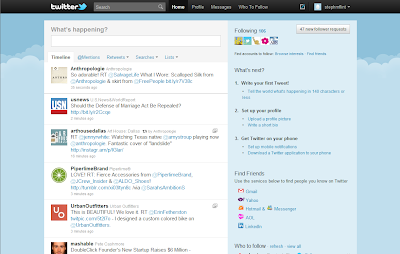 So many tweets, so little time ...
 fish eye lens advantage image from forkergirl's photostream
 If a deeper connection is considered, the external division and separation of fish and human raises questions about function, form, and layout of internal organs. Just how is the mermaid metaphor creature mapped internally? Surely anatomical mingling occurs, or it is difficult to imagine viability of this trans-species as a species distinct from human and fish with its own biological frameworks and systems; the fish, in the more frequent ichthyological bottom half mermaid configuration, would have no heart, no brain, no circulation of human blood in fish areas. If the halves are stitched together superficially and not integrated into a single being, each half would then need separate and contained systems of respiration, systems of ingestion, systems of excretion, etc. A romanticized depiction (and why not such a depiction!) of mermaids does not support contamination of the beautiful, usually, woman, with fishiness. Indeed, the mermaid might even be a purer form of woman for rejecting genitalia in favor of fishtail; with breasts, she may suckle a child and could even seem, depending on who's constructing the idea system, nearly as wholesome and good as Mary, Mother of Christ. In this wonderful anatomical chart (to the right) of a mermaid from gearfuse.com, the internal revelation is still decidedly human in keeping with the biological structure of most mermaids; no doubt a common or typical mermaid is dissected in the well-imagined image of mermaid reality wherever it exists, in imagination, gaming, and/or virtual worlds, for instance. Mermaid Diaries is a blog all about a little mermaid named Natalia Zelmanov and her adventures in second life. Below is a video of a Spore mermaid followed by a video of a Second Life mermaid show: